Does Virtual Take Longer? An Empirical Investigation of Service Time in Telemental Health
Telemedicine visits, in the form of synchronous virtual interactions between patients and providers, have witnessed a significant surge during and after the COVID-19 pandemic. Yet, little is known about the operational effects of using telemedicine. In this study, we examine the causal relationship between the form of psychotherapy treatments (virtual or in-person) and the service time of these treatments. Using visit-level patient data for psychotherapy visits in the United States (U.S.), we employ an instrumental-variable approach to estimate the causal impact of telemedicine use on monthly service time. We find that telemedicine use significantly increases monthly service time, driven by both higher visit frequency and longer per-visit service time. These effects may reflect challenges and limitations in the use of digital technologies during telemedicine visits. Heterogeneity analyses further show that retirees experience larger increases in service time than non-retirees, and treatment effects rise with patient age. These patterns could be attributed to a decline in technological literacy among older retirees. These results show that serving elderly patients, especially retirees, with telemedicine can increase the burden on healthcare providers. Our study contributes to a better understanding of how telemedicine affects the efficiency of mental health care delivery.
The Question: Is Virtual Care More Efficient?
Telemedicine visits surged during the COVID-19 pandemic and have stayed common since. Psychotherapy, which is mostly conversation, is widely seen as the specialty best suited to virtual care.
Yet little is known about the operational side: does seeing patients virtually change how much provider time care takes? Service time drives provider productivity, patient access, and billing, so the answer matters for how mental health care is delivered.
Data and Approach
We use visit-level claims data for U.S. psychotherapy visits from the Merative MarketScan Commercial and Medicare databases, covering January 2021 to March 2023. Aggregated to the patient-month level, this gives about 13 million observations for privately insured patients and more than a quarter of a million for Medicare patients aged 65 and over. Service time comes from billing codes for 30-, 45-, and 60-minute psychotherapy sessions.
Patients who choose telemedicine may differ from those who do not, so a simple comparison could be misleading. We therefore use an instrumental-variable approach. Our instrument is the previous month’s average fuel price in the patient’s state: when travel is more expensive, patients are nudged toward virtual visits.
What We Find
1. Telemedicine increases service time
A 10-percentage-point increase in a patient’s share of virtual visits raises monthly service time by about 8.7% for privately insured patients and 12.0% for Medicare patients.
2. Through both more visits and longer visits
The increase comes from two sources:
- More frequent visits: about +7.5% (private) and +10.1% (Medicare). Plausibly, virtual visits remove “setup costs” such as travel and time off work, so patients book more often.
- Longer visits: about +1.1% (private) and +1.7% (Medicare) per visit. This runs against efficiency and may reflect the frictions of communicating through a screen.
3. Larger effects for older and retired patients
Among Medicare patients, the increase in service time is larger for retirees than for those still working, and an instrumental forest analysis shows the effects rise steadily with age:
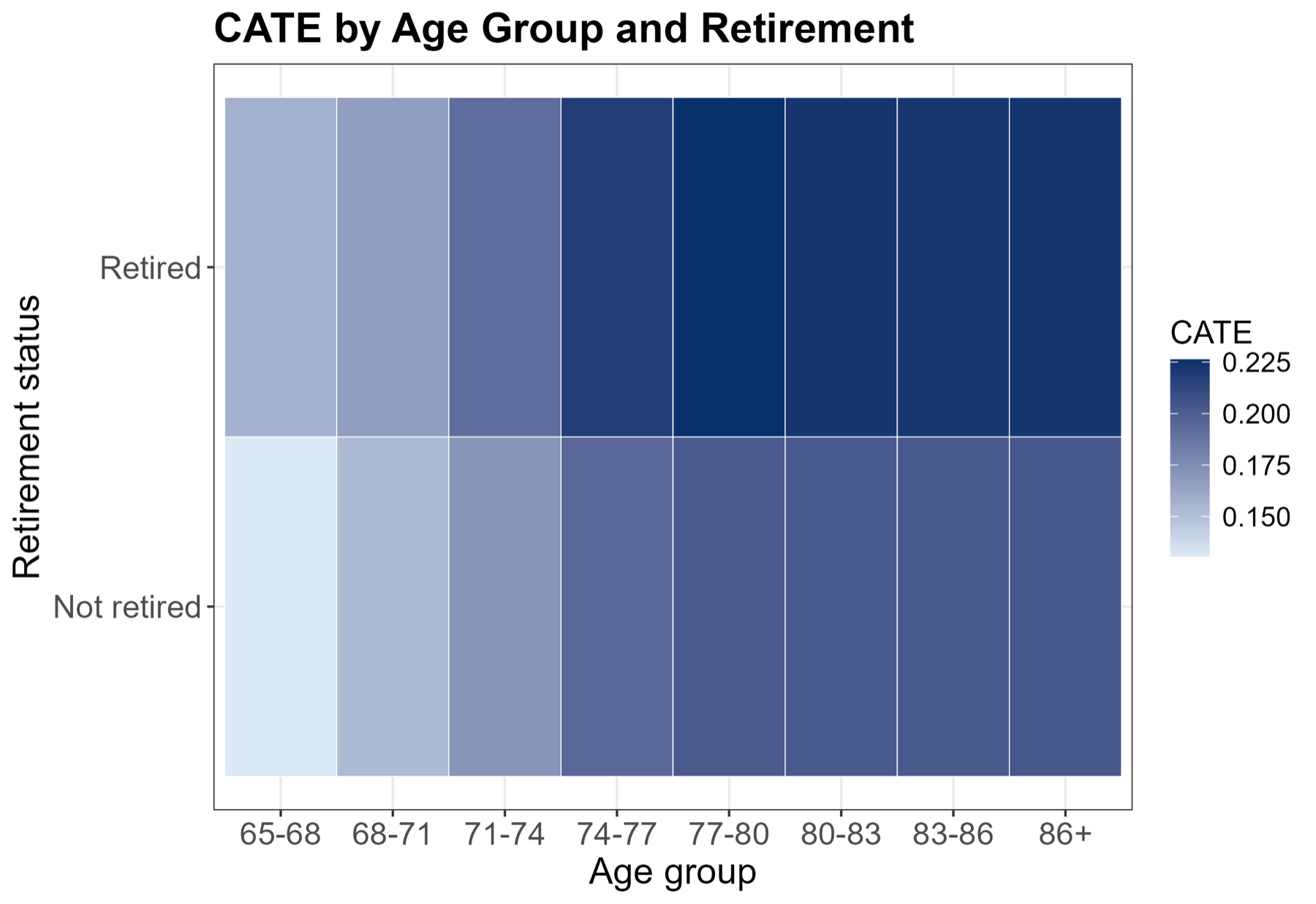
These patterns could be attributed to lower technological literacy among older retirees.
Why It Matters
Telemedicine expands access, but it is not free in terms of provider time. Even in psychotherapy, the specialty best suited to virtual care, telemedicine increases the burden on providers, and serving elderly patients, especially retirees, virtually can be particularly time-consuming.
Health systems could respond with digital-literacy support for patients, pre-session technical check-ins, and hybrid care models that route patients who struggle with technology to in-person visits.